Summary
Mishima Taisha (三嶋大社) is the grand shrine of Izu and is widely regarded as the Ichinomiya (chief shrine) of the former Izu Province. Located near JR Mishima Station on the old Tokaido route, it has long been a spiritual gateway to the Izu Peninsula.
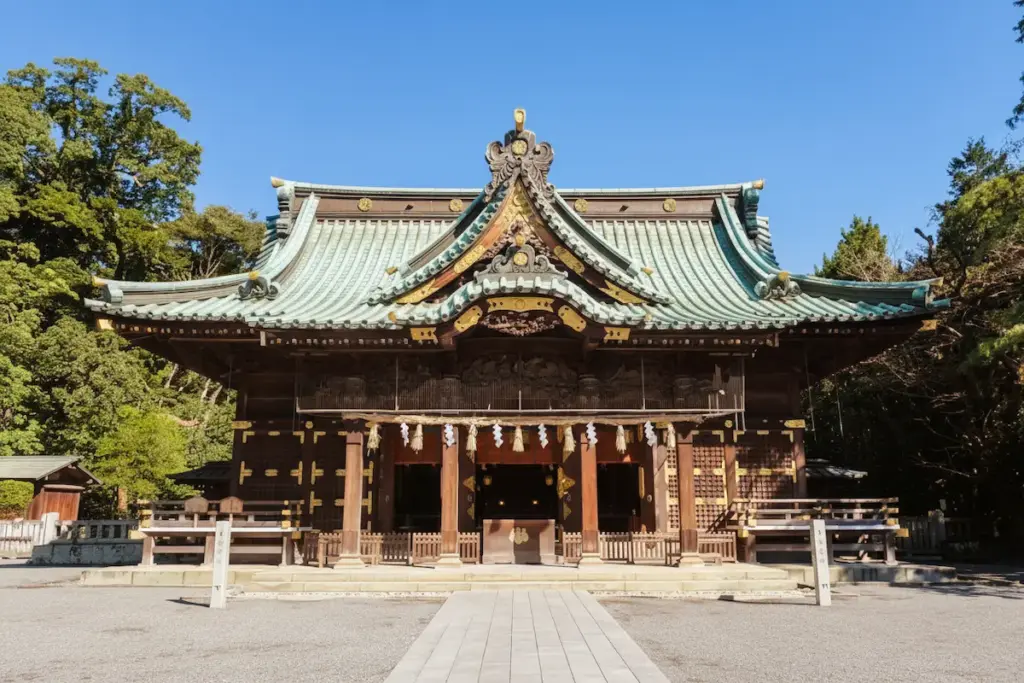
The shrine is known for its large late Edo-period sanctuary complex in unpainted zelkova wood, its ancient fragrant olive tree, and deep connections with Minamoto no Yoritomo, who prayed here for the success of his uprising.
Key Facts
- Province: Izu (historical province); widely regarded as the Ichinomiya (chief shrine) of Izu.
- Enshrined Deities: Oyamatsumi no Mikoto (大山祇命), guardian of mountains, forests, and agriculture; Tsumi Hayae Kotoshironushi no Kami (積羽八重事代主神), associated with prosperity and good fortune, often linked with Ebisu. Together they are revered as Mishima Daimyojin (三嶋大明神).
- Founded / Legend: Exact founding date unknown. Ancient faith developed around the volcanic landscape of the Izu Peninsula and islands, and the sea routes connecting them.
- Architecture: Late Edo-period complex shrine — a connected honden, heiden, and haiden completed in 1866, built mainly of unpainted zelkova with fine carvings by the Ozawa school. The main buildings are designated Important Cultural Properties of Japan.
History in Brief
Mishima Taisha has long been revered as the central shrine of Izu, with roots in ancient worship of the local mountains, forests, and seas. By the Nara and Heian periods, it appears in historical records and was ranked as a Myojin Taisha, a major shrine of special status.
When Minamoto no Yoritomo was exiled to Izu, he prayed here for the revival of the Genji clan. After establishing the Kamakura shogunate, he and later warriors granted lands and treasures, raising the shrine’s prestige as a guardian of the eastern provinces.
The present sanctuary complex was rebuilt after the 1854 Tokai earthquake and completed in 1866. Today the honden, heiden, and haiden are designated as Important Cultural Properties, and the shrine remains a cultural and spiritual center of Mishima City.
Enshrined Deities
Oyamatsumi no Mikoto protects mountains, forests, and agriculture, supporting harvests and the natural environment. Tsumi Hayae Kotoshironushi no Kami is associated with prosperity, business success, and fishing. Together as Mishima Daimyojin, they are widely revered for good fortune, safe travel by land and sea, and the well-being of families and communities.
Etiquette
Please keep these simple manners in mind when visiting the shrine.
- Purify your hands and mouth at the temizuya (手水舎).
- Bow twice, clap twice, and bow once (ni-rei ni-hakushu ichi-rei).
- Keep quiet around the honden (本殿, main sanctuary).
- Please refrain from eating, drinking, and smoking within the shrine grounds.
- Aerial drones are strictly prohibited.
- Please be mindful when taking photos, as some areas may be sacred.
Visitor Tips
- The main sanctuary complex is a connected honden, heiden, and haiden with detailed late Edo-period wood carvings.
- The buden (舞殿), the dance stage in front of the haiden, is used for kagura and festival performances.
- The large fragrant olive tree (kinmokusei), estimated to be about 1,200 years old, blooms twice in September and fills the grounds with a sweet scent.
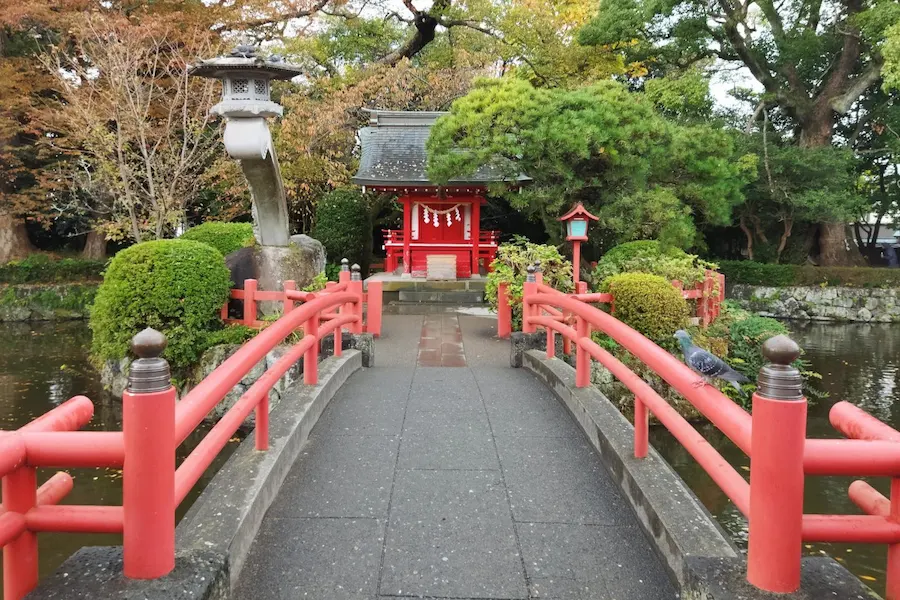
- The pond area with its small red bridge offers one of the most peaceful corners of the shrine.
Photography may be restricted near sacred areas. Please follow on-site signs.
Omamori (Amulets)
Common omamori (お守り) for travel safety, protection, and good fortune are typically ¥500–¥1,000. Offerings are made as hatsuhoryo (初穂料). Shrine offices usually accept cash only.
You can find details on the shrine’s official page (Japanese only): Amulets Page ↗
Festivals
Mishima Taisha hosts many ceremonies throughout the year. The three below are especially representative.
- Ta-matsuri & Ota-uchi Shinji (田祭・お田打ち神事): January 7 — New Year rites praying for abundant harvests, featuring a traditional performance reenacting the rice-farming cycle; designated as a Shizuoka Prefectural Intangible Folk Cultural Property.
- Mishima Taisha Reisai & Summer Festival (三嶋大祭り): August 15–17 — the grand annual festival of the shrine and Mishima’s biggest summer event, with traditional rituals, mikoshi, dashi floats, and lively city celebrations.
- Yabusame Shinji (流鏑馬神事): August 17 — horseback archery performed on the shrine’s riding ground during the festival period, praying for peace and good harvests.
How to Visit & Access
Located in central Mishima City, Mishima Taisha stands close to the old Tokaido road and is a natural stop for visitors heading into the Izu Peninsula.
From JR Mishima Station, walk through the town streets toward the shrine. The Izuhakone Railway Sunzu Line also provides easy access.
- Address: 2-1-5 Omiya-cho, Mishima, Shizuoka (Google Maps) ↗
- Nearest Station: JR Mishima Station — about 12–15 min walk; Izuhakone Railway Sunzu Line — Mishima-Tamachi Station, about 7 min walk.
- Hours: Prayer desk and omamori counters around 8:30–16:00; grounds generally open at all times.
- Official Site: Mishima Taisha (Japanese only) ↗
Travel times are approximate and may vary by schedule. Hours may change by season and events.
Nearby
- Rakujuen Park — a historic garden and park with ponds and small zoo facilities, located opposite JR Mishima Station.
- Genbe River (Genbe-gawa) — a shallow, spring-fed river with clear water flowing through town; a pleasant walking route between the station area and the shrine.
- Kakita River Park (Kakitagawa Park) — a famous natural spring area with crystal-clear water fed by Mt. Fuji; its “springs” (wakima) and wooden walkways make an easy nature trip from Mishima.
- Mishima Skywalk — Japan’s longest pedestrian suspension bridge with views toward Mt. Fuji; accessible by bus or car from Mishima Station as a half-day trip.
Support this Guide
Your support helps me continue writing and sharing shrine culture. Thank you for helping this project grow.