Summary
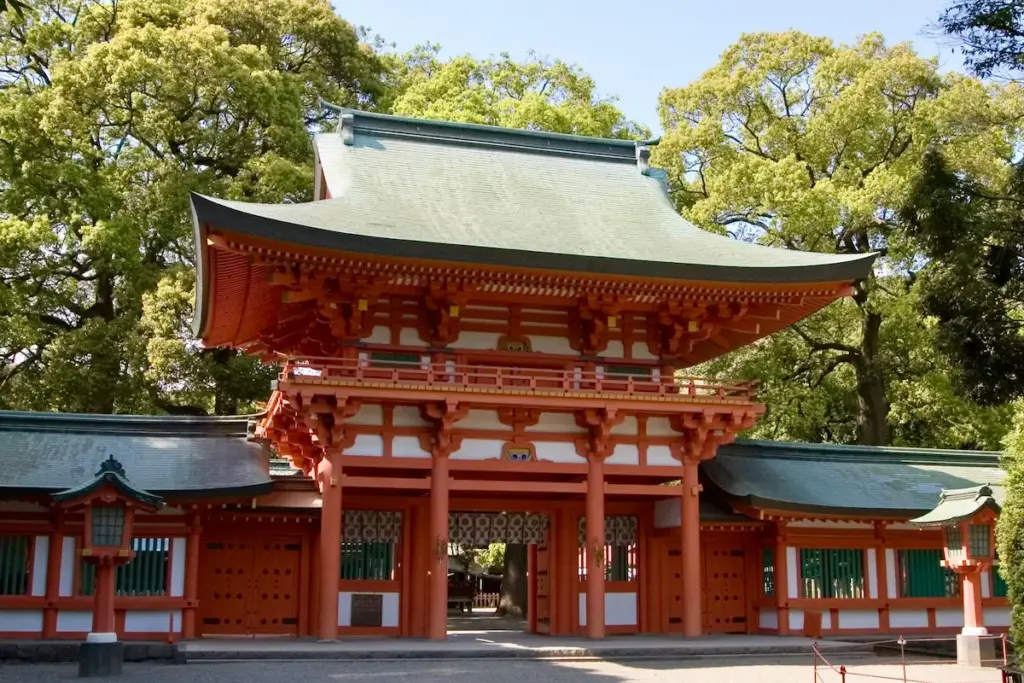
Hikawa Shrine (氷川神社, Hikawa Jinja) is the head shrine of Musashi and the spiritual heart of Omiya. Dedicated to Susanoo no Mikoto, Inadahime (Kushinadahime), and Onamuchi/Okuninushi no Mikoto, it is known for its vermilion Romon gate and calm, tree-lined approach.
Key Facts
- Province: Musashi (historical province); head of ~280 Hikawa shrines.
- Enshrined Deities: Susanoo no Mikoto (素戔嗚尊), Inadahime / Kushinadahime (稲田姫命), Onamuchi/Okuninushi (大己貴命).
- Founded / Legend: According to shrine tradition, its origins date back to 473 BCE.
- Architecture: Nagare-zukuri (流造).
Ichinomiya Status in Musashi (Quick Note)
In ancient times, the Ichinomiya (chief shrine) of Musashi Province was not officially fixed, and several shrines have been regarded as candidates. Hikawa Shrine in Omiya, Ono Shrine in Tama, and Hikawa Nyotai Shrine in Midori Ward are all considered ronsha (rival claimants) according to different historical sources. The Shintoshu (14th century) describes Ono Shrine as the Ichinomiya and Hikawa Shrine as the third shrine, while later eras emphasized Hikawa Shrine’s role as the guardian shrine of Musashi.
Hikawa Nyotai Shrine, located across the former Minuma marsh, is closely related to Hikawa Shrine as the female counterpart in ancient worship. These overlapping traditions reflect the province’s wide area and diverse religious history.
History in Brief
Hikawa Shrine has protected the Musashi region since ancient times and gave its name to the city: “Omiya” means “the great shrine.” The approach (sando) stretches about 2 km through greenery. The current haiden (拝殿, worship hall) was completed in 1940 (Showa 15). Many branch Hikawa shrines across Saitama and Tokyo share the same faith.
Enshrined Deities
Susanoo protects from calamities; Inadahime (Kushinadahime) supports family safety; Onamuchi/Okuninushi brings good ties (en-musubi) and prosperity. Together, they are believed to guard daily life and the community.
Etiquette
Please keep these simple manners in mind when visiting the shrine.
- Purify your hands and mouth at the temizuya (手水舎).
- Bow twice, clap twice, and bow once (ni-rei ni-hakushu ichi-rei).
- Keep quiet around the honden (本殿, main sanctuary).
- Please refrain from eating, drinking, and smoking within the shrine grounds.
- Aerial drones are strictly prohibited.
- Please be mindful when taking photos, as some areas may be sacred.
Visitor Tips
- The long tree-lined approach (sando) stretches about two kilometers from Omiya Station, offering a calm walk toward the main sanctuary.
- After entering the grounds, the bright vermilion Romon gate and the Shinbashi Bridge over the Kami-ike Pond create one of the most iconic views of Hikawa Shrine.
- Munakata Shrine stands on a small island across a red bridge, surrounded by water and greenery—an excellent spot for quiet photos.
- Jano-ike (蛇の池), a spring-fed pond linked with dragon legends, is one of the most atmospheric places within the grounds.
- The Meoto Kusu (夫婦楠), two sacred camphor trees growing side by side, are visited for family harmony and good ties (en-musubi).
Photography may be restricted near sacred areas. Please follow on-site signs.
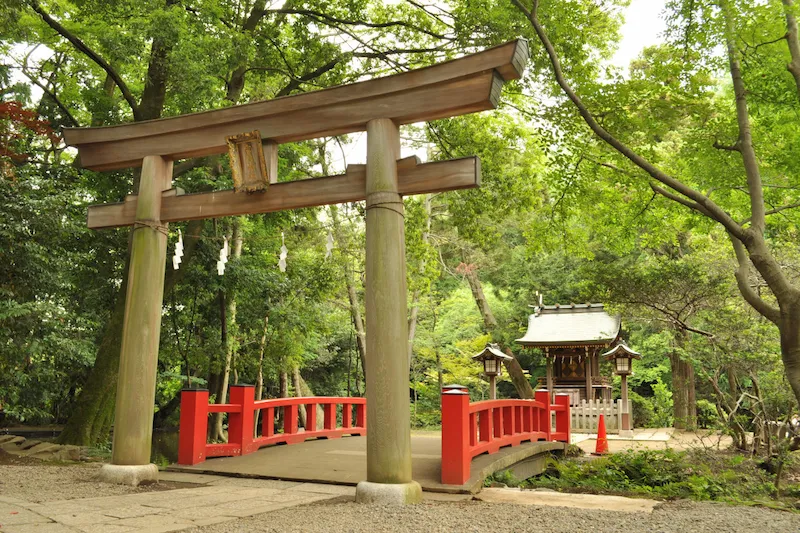
Photo by Ocdp, CC BY-SA 3.0.
Omamori (Amulets)
Common omamori (お守り) for safe travel, good ties, and protection are available for about ¥500–¥1,500. Offerings are made as hatsuhoryo (初穂料). Shrine offices usually accept cash only.
You can find details on the shrine’s official page (Japanese only): Amulets Page ↗
Festivals
Hikawa Shrine holds many traditional ceremonies throughout the year. The three below are especially well known for their history and atmosphere.
- Matogami-shinji (的神事): Around February 7 — an ancient archery purification rite to ward off evil.
- Chinka-sai (鎮花祭): Early April (around April 5) — a spring rite offering cherry blossoms, featuring kagura and miko dances.
- Reitaisai (例大祭): August 1–2 — the shrine’s principal annual festival, with processions and rituals.
- Daitosai (大湯祭, Toka-ichi): December 10 — one of the shrine’s most renowned special rites. The market fills the grounds with lucky rakes and many stalls.
Pre-festival: Nov 30–Dec 9 (bonfires each evening). Post-festival: Dec 11.
How to Visit & Access
Located in central Omiya, known for its long tree-lined approach.
From JR Omiya Station (East Exit), walk about 15 minutes through the 2 km sando stretching north to the shrine.
- Address: 1-407 Takahanacho, Omiya-ku, Saitama (Google Maps) ↗
- Nearest Station: JR Omiya Station (East Exit) — about 15–20 min walk.
- Hours: Gate opens 5:00–18:00 (May–Aug), 5:30–17:30 (Mar–Apr, Sep–Oct), 6:00–17:00 (Nov–Feb).
- Official Site: Official Site (Japanese only) ↗
- Official PDF: English Guide (PDF) ↗ — the shrine distributes this brochure; no English website.
- Official Instagram: @musashiichinomiya.hikawajinjya ↗— for seasonal photos and updates.
Travel times are approximate and may vary by schedule. Hours may vary by season and events.
Nearby
- Omiya Park — a large park with ponds, walking paths, and cherry blossoms in spring, located next to the shrine.
- Saitama Prefectural Museum of History and Folklore — inside Omiya Park; exhibits on local history and traditional culture.
- The Railway Museum — a major transport museum one stop from Omiya on the New Shuttle, popular with families and train fans.
- Omiya Bonsai Art Museum — the world’s first public bonsai museum, with rotating displays of bonsai and a small garden; about 20 minutes’ walk from the shrine.
Support this Guide
Your support helps me continue writing and sharing shrine culture. Thank you for helping this project grow.