Summary
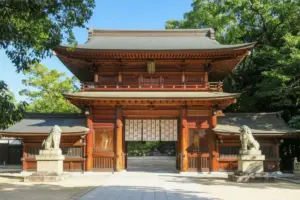
Usa Jingu (宇佐神宮) is one of Japan’s most important Hachiman shrines. It stands in Usa City, Oita Prefecture, and is widely respected as the Ichinomiya (chief shrine) of Buzen Province. The spacious grounds feel calm and ancient, with long forest paths and beautiful vermilion buildings.
Many visitors come to pray for safety, gratitude, and peace of mind. Usa Jingu is also known for its special worship style: two bows, four claps, and one bow (ni-rei yon-hakushu ichi-rei).
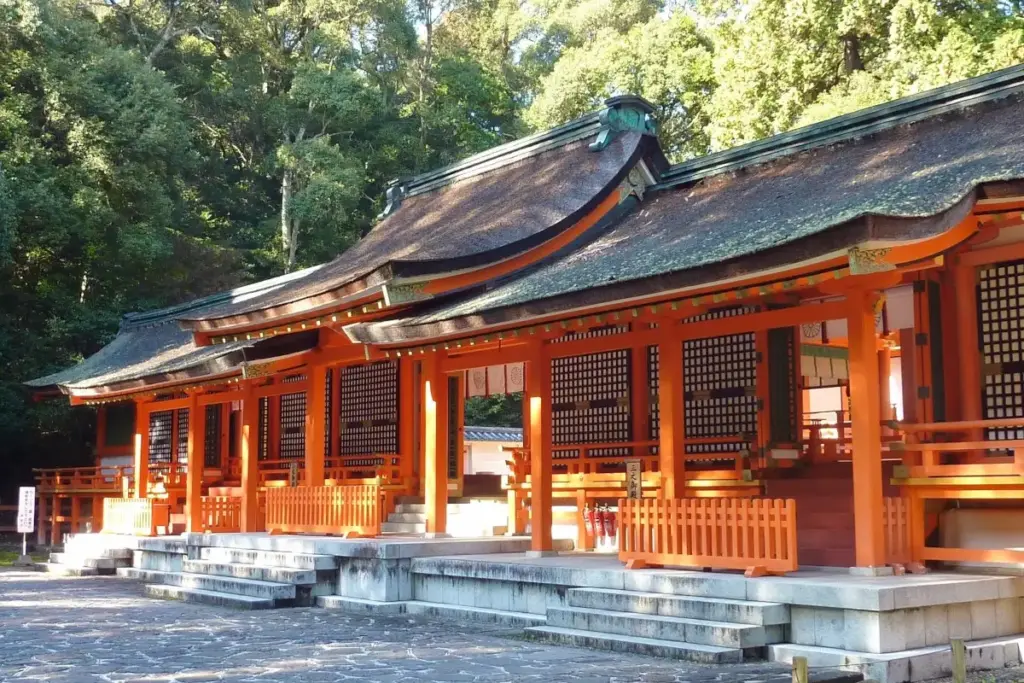
Photo by Sanjo, CC BY-SA 3.0.
Key Facts
- Province: Buzen (historical province); widely regarded as the Ichinomiya of Buzen.
- Enshrined Deities: Hachiman Okami (八幡大神), Hime Okami (比売大神), and Jingu Kogo (神功皇后).
- Founded / Legend: Usa Jingu is closely linked to the early development of Hachiman faith. According to shrine tradition, Hachiman kami appeared here through divine oracles and later became closely associated with the imperial court.
- Main Feature: A large shrine complex with Upper Shrine (Jogu 上宮) and Lower Shrine (Gegu 下宮), set in deep forest.
- Architecture: Hachiman-zukuri (八幡造), a distinctive shrine style associated with Hachiman worship.
History in Brief
Usa Jingu is closely tied to the rise of Hachiman worship in Japan. Over time, the shrine became connected with the protection of the nation and the well-being of the people. It also played a role in the religious network of Kyushu and the wider Japanese archipelago.
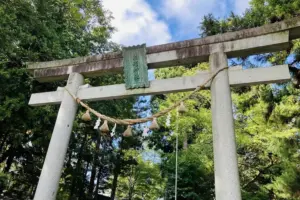
Today, the shrine grounds preserve a strong sense of sacred space. Visitors walk through long approaches lined with trees, pass through major gates, and reach the Upper Shrine (Jogu) where the main sanctuaries stand. The Lower Shrine (Gegu) is also important and is included in most visits.
Some details of early history involve legend and shrine tradition. When exact dates or events are unclear in English sources, this guide uses and recommends checking the official Japanese pages.
Enshrined Deities
Usa Jingu enshrines Hachiman Okami, together with Hime Okami and Jingu Kogo. Hachiman is widely honored as a protective kami linked with peace, community, and historical guardianship.
Many visitors pray here for safe travel, protection from misfortune, and harmony in family and society.
Etiquette
Please keep these simple manners in mind when visiting the shrine.
- Purify your hands and mouth at the temizuya (手水舎).
- Keep quiet around the honden (main sanctuary).
- Please refrain from eating, drinking, and smoking within the shrine grounds.
- Aerial drones are strictly prohibited.
- Please be mindful when taking photos, as some areas may be sacred.
Local practice at Usa Jingu follows two bows, four claps, and one bow (ni-rei yon-hakushu ichi-rei). If you are unsure, follow the people around you and the on-site signs.
Visitor Tips
- Visit both the Upper Shrine (Jogu 上宮) and the Lower Shrine (Gegu 下宮); worshipping only one is traditionally considered incomplete.
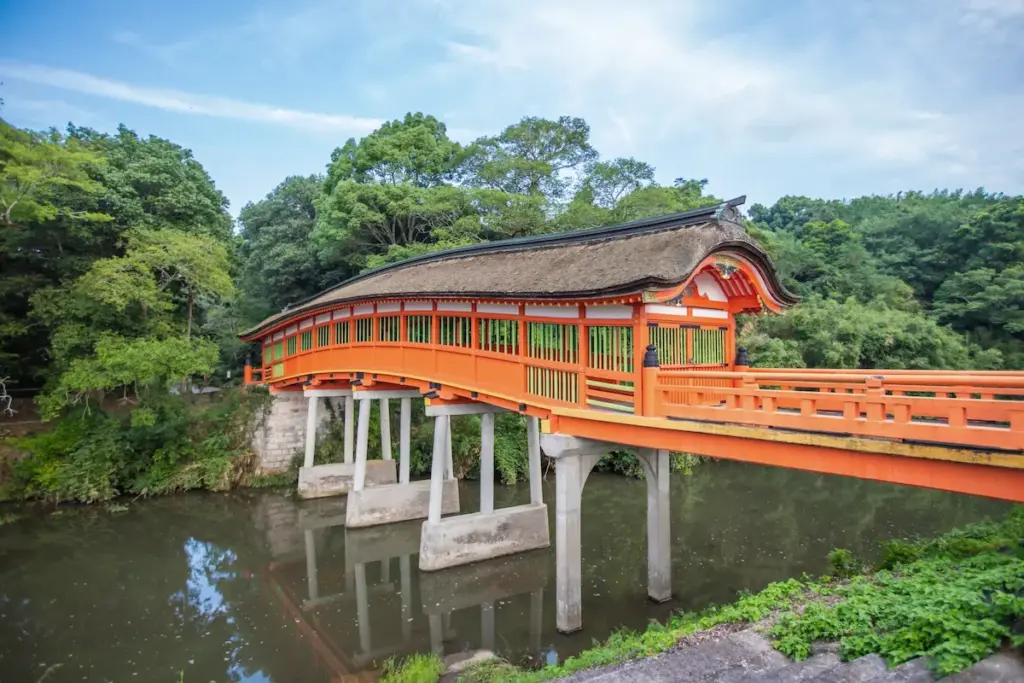
- The Kurehashi Bridge (呉橋) near the Lower Shrine is a distinctive roofed sacred bridge and a well-known landmark of Usa Jingu.
- The main halls of the Upper Shrine follow the unique Hachiman-zukuri style, with paired buildings connected by a central passage.
- Near the Upper Shrine is Goreisui (御霊水), a sacred spring long associated with ritual purification.
- The shrine grounds are wide and gently sloped; allow time to walk between areas and enjoy the forest setting.
Photography may be restricted near sacred areas. Please follow on-site signs.
Omamori (Amulets)
Common omamori (お守り) for travel safety, protection, and good fortune are typically ¥1,000–¥2,000. Offerings are made as hatsuhoryo (初穂料). Shrine offices usually accept cash only.
You can find details on the shrine’s official page: Amulets and Prayer Page ↗
Festivals
Usa Jingu holds many ceremonies through the year. The three below are especially well known.
- Reitaisai (例大祭): March 18 — the shrine’s most important annual ceremony.
- Goshinko-sai (御神幸祭): late July to early August (often July 31–August 2) — a major summer festival with processions and lively events.
- Chushu-sai (仲秋祭): early autumn — a seasonal ceremony that highlights harvest-time gratitude.
Festival dates can change by year. Please check the official schedule before you go.
How to Visit & Access
Usa Jingu is in Usa City, Oita Prefecture, in northeastern Kyushu. The shrine is not in the city center, so most visitors use a bus, taxi, or car from the nearest rail station.
From JR Usa Station, take a local bus or taxi to the shrine area.
- Address: 2859 Minami-usa, Usa, Oita 872-0102 (Google Maps) ↗
- Nearest Station: JR Usa Station (bus / taxi).
- Hours: Upper Shrine (Jogu) gate opens 6:00–18:00 (except New Year period).
- Prayer Hours: 9:00–16:00 (daily).
- Official Site: Usa Jingu (Japanese Only) ↗
Travel times are approximate and may vary by schedule. Hours may vary by season and events.
Nearby
- Usa Shrine approach area — small shops and local food around the entrance streets.
- Ajimu town — a rural area known for vineyards and countryside views.
- Futago-ji (Futagozan Futago-ji) — a historic temple in the Usa region, set in a quiet forested area (about 40 minutes by car).
Support this Guide
Your support helps me continue writing and sharing shrine culture. Thank you for helping this project grow.