Summary
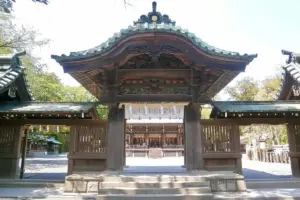
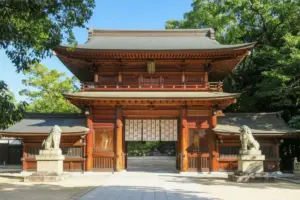
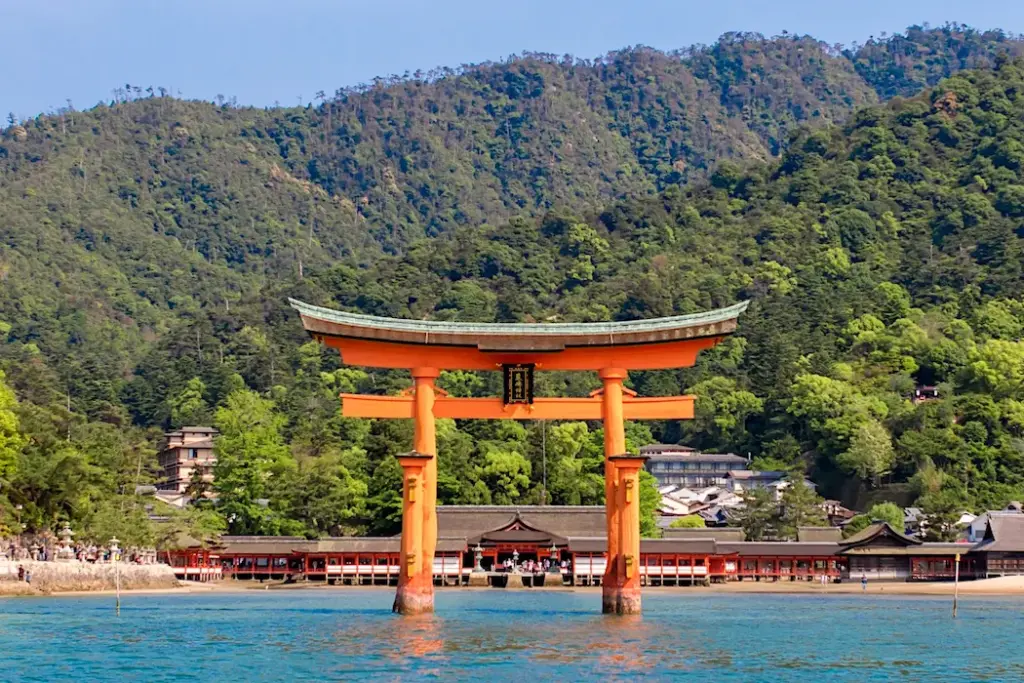
Itsukushima Shrine (厳島神社) is the Ichinomiya (chief shrine) of Aki Province and one of Japan’s most famous Shinto shrines. Built partly over the sea on Miyajima Island, it is known for its vermilion buildings that seem to float at high tide, together with the great torii gate offshore. The shrine and surrounding landscape are registered as a UNESCO World Cultural Heritage site.
Key Facts
- Province: Aki (historical province); widely regarded as the Ichinomiya (chief shrine) of Aki.
- Enshrined Deities: Ichikishimahime-no-mikoto (市杵島姫命), Tagorihime-no-mikoto (田心姫命), Tagitsuhime-no-mikoto (湍津姫命).
- Founded / Legend: Tradition dates the founding to 593, when Saeki no Kuramoto received an oracle and built a shrine where the tide ebbs and flows.
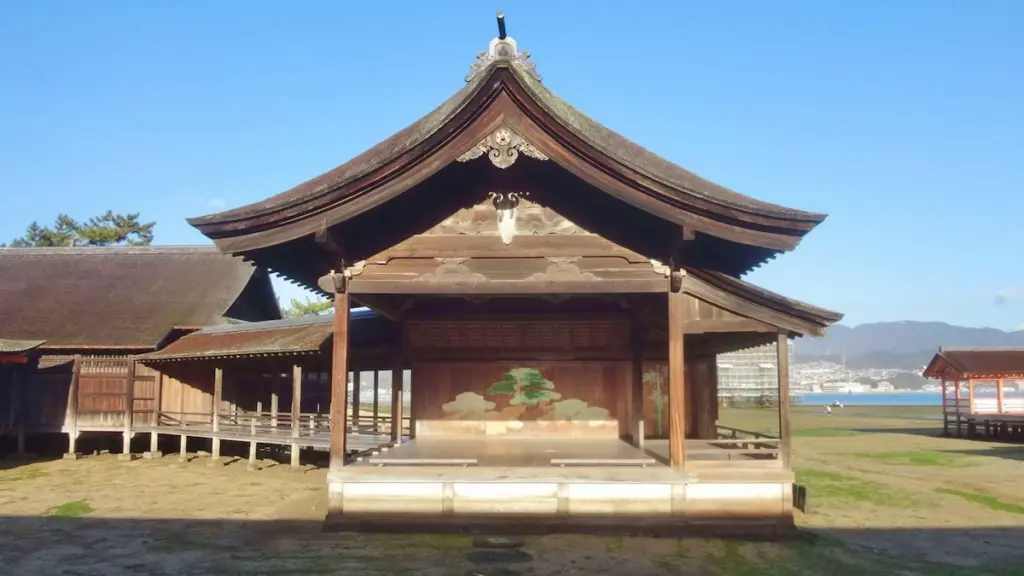
- Architecture: Shinden-zukuri style complex built over the tidal shore, with long corridors, pavilions, and a noh stage. Many buildings are National Treasures and Important Cultural Properties.
- Setting: Shrine buildings stand on pillars in the shallow sea, facing the famous great torii gate offshore.
- World Heritage: Registered in 1996 as “Itsukushima Shinto Shrine,” a UNESCO World Cultural Heritage site.
Ichinomiya Status in Aki (Quick Note)
Itsukushima Shrine is widely regarded as the Ichinomiya (chief shrine) of Aki Province. From early times it was revered as a protector of the surrounding sea routes and the wider Chugoku region. As pilgrims and officials traveled along the old Sanyo road and by boat, Miyajima became both a strategic port of call and a spiritual gateway to western Japan.
History in Brief
According to shrine tradition, the three deities of Itsukushima were linked with ancient myths of the sea and were invited to dwell on this island. In 593, Saeki no Kuramoto received a divine message and built the first shrine at the place where the tide rises and falls, creating a sacred setting between sea and mountain.
In 1168, Taira no Kiyomori rebuilt the shrine in the elegant shinden-zukuri style, raising its prestige as a spiritual center for sea routes in western Japan. Later rulers also supported the shrine, and “Miyajima of Aki” became known as one of Japan’s celebrated scenic places. In 1996, Itsukushima Shrine and its surrounding landscape were registered as a UNESCO World Cultural Heritage site.
Enshrined Deities
The three kami of Itsukushima Shrine — Ichikishimahime-no-mikoto, Tagorihime-no-mikoto, and Tagitsuhime-no-mikoto — are ancient deities of water, sea routes, and prosperity. They are also linked with the protection of the imperial family and the safety of the nation.
Many visitors pray here for safe travel by land and sea, protection from misfortune, business success, and the well-being of their families. The shrine’s location over the water expresses the close bond between these deities and the sea around Miyajima.
Etiquette
Please keep these simple manners in mind when visiting the shrine.
- Purify your hands and mouth at the temizuya (手水舎).
- Bow twice, clap twice, and bow once (ni-rei ni-hakushu ichi-rei).
- Keep quiet around the honden (本殿, main sanctuary) and during rituals.
- Please refrain from eating, drinking, and smoking within the shrine corridors and inner grounds.
- Aerial drones are strictly prohibited without special permission.
- Please be mindful when taking photos, as some areas may be sacred.
Visitor Tips
- The shrine buildings stand on pillars over the tidal shore; at high tide they appear to float, while at low tide the exposed ground shows their structure.
- The long vermilion corridors offer changing views of the bay and mountains. Please walk slowly and watch your step on narrow floor gaps.
- Flat, comfortable shoes are recommended, as high heels may get caught between the floorboards.
- The historic noh stage stands above the water and is used for ritual performances during special events.
- Views of the great torii gate change with the tide; many visitors enjoy seeing both high tide and low tide.
- Early morning or late afternoon are calmer times to enjoy the shrine before or after peak crowds.
Photography may be restricted near sacred areas. Please follow on-site signs.
The shrine looks very different at high tide and low tide. For tide times, please refer to the official tide table (Japanese) ↗
Omamori (Amulets)
Common omamori (お守り) for travel safety, maritime safety, protection, and good fortune are typically ¥500–¥1,500. Offerings are made as hatsuhoryo (初穂料). Shrine offices usually accept cash only.
Details of specific omamori may change over time. Please check the onsite displays when you visit.
Festivals
Itsukushima Shrine hosts many traditional ceremonies throughout the year. The three below are especially famous and attract many visitors.
- Kangen-sai (管絃祭): (late July to early August; date varies by the lunar calendar) — illuminated boats sail around the bay while gagaku and kangen music are dedicated on the water.
- Momoka-sai & Kikuka-sai (桃花祭・菊花祭): Spring and autumn — classical bugaku dances are offered on the shrine’s stage after the evening rites.
- Tamatori-sai (玉取祭): July or August (date varies by tides) — after a shrine ceremony, participants compete in the water to take the sacred jewel placed on a seaside scaffold.
How to Visit & Access
Itsukushima Shrine stands on Miyajima (Itsukushima) Island in Hatsukaichi City, Hiroshima Prefecture. The island is reached by a short ferry ride from Miyajimaguchi, and the shrine is within walking distance of the pier.
From Hiroshima, take the JR Sanyo Line or the Hiroden streetcar to Miyajimaguchi, then board a ferry to Miyajima Island. The shrine is a short walk from the pier.
- Address: 1-1 Miyajimacho, Hatsukaichi, Hiroshima (Google Maps) ↗
- Nearest Station: JR / Hiroden Miyajimaguchi Station — about 10 minutes by ferry to Miyajima Island.
- Hours: Shrine buildings open from 6:30; closing time varies by season (about 17:00–18:30). Admission is required for the inner shrine area.
- Official Site: Itsukushima Shrine (English) ↗
For more travel information about Miyajima, including ferries, maps, and island highlights, please see the
Miyajima Tourism Association (English) ↗
Travel times are approximate and may vary by schedule. Hours and admission may change by season and events.
Nearby
- Daiganji Temple — a historic temple next to the shrine, associated with Benzaiten and closely linked to the worship of Miyajima.
- Toyokuni Shrine (Senjokaku) — a vast wooden hall on the hillside above Itsukushima Shrine, offering wide views over the bay and town.
- Daisho-in Temple — an important Shingon Buddhist temple at the foot of Mt. Misen, with many statues, halls, and scenic paths.
- Mt. Misen Area — hiking trails and ropeway access to viewpoints over the Seto Inland Sea; known for its primeval forest and panoramic scenery.
Support this Guide
Your support helps me continue writing and sharing shrine culture. Thank you for helping this project grow.